About Valmet Automotive
Valmet Automotive is a manufacturing solutions partner operating in a multi-industry and multi-customer environment. From its plant in Uusikaupunki — one of Finland’s largest industrial sites — it runs and develops contract manufacturing and engineering solutions in parallel for technology companies and their customers. With more than 55 years of high-expertise serial production behind it, the Uusikaupunki plant today serves the automotive and defense sectors as well as other high-tech industrial sectors.
The Valmet Automotive group employs people across Finland, Germany and Poland, with the majority based in Uusikaupunki, Finland. From specialist roles to work in production lines, this shapes how and where the company communicates to reach all.
Two goals, one challenge: reaching the people in real time
The culture and ways of working at Valmet Automotive come down to two things it takes seriously: strong internal communication and an equally strong commitment to safety.
Communication here is open and two-way, and it starts from the people who make the products — the work community and its people, as the company sees it, are the core of the business.
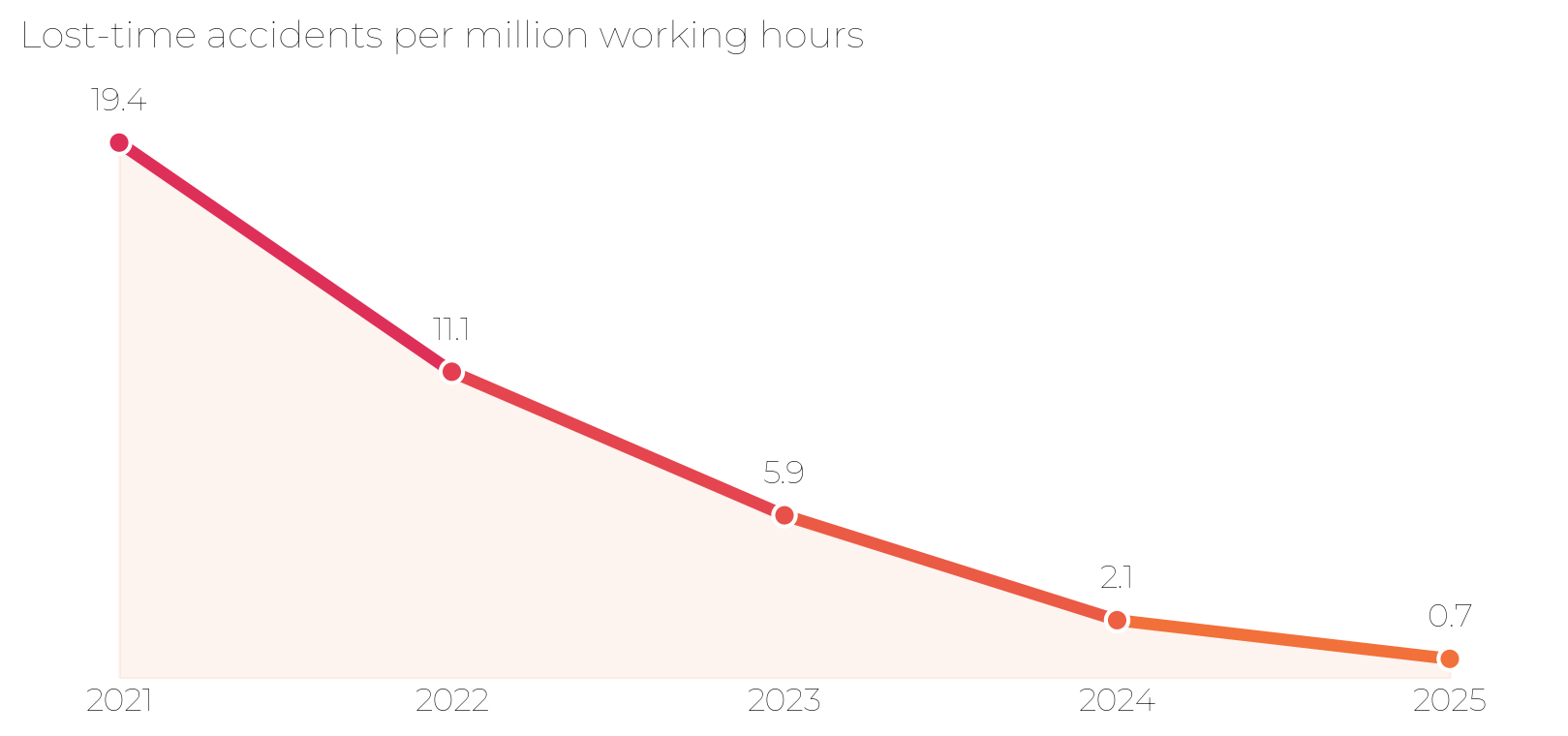
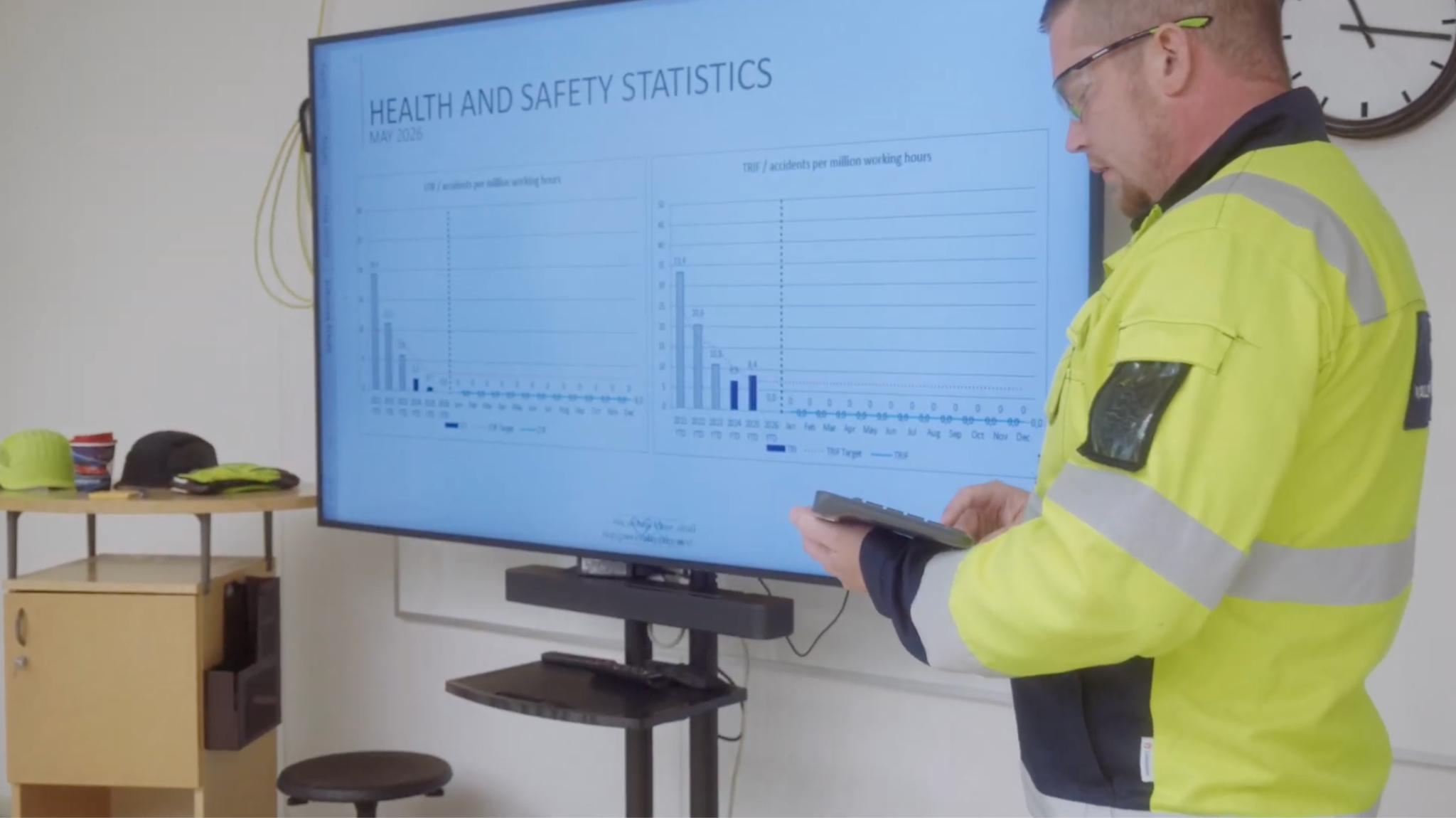
The safety culture has the numbers to back it up. Lost-time accidents (per million hours worked) have fallen from 19.4 in 2021 to just 0.7 in 2025, total recordable injuries from 33.4 to 8.4 over the same years, and at the time of writing the plant had gone 473 days without an accident.
But both cultures only work if they reach everyone — and while email and the intranet reach the desk-based part of the organization, most of Valmet Automotive’s people spend the day on production-related tasks, not at a desk, where those tools don’t catch them in the flow of work.
Paper notice boards are out of date the moment they go up, and a message passed manager-to-team by word of mouth can change along the way. For safety information, it often has to land as soon as possible.
Digital signage helps to reach employees where they work
Valmet Automotive brought Valotalive into the Uusikaupunki plant in 2022 to sharpen its safety communication, and quickly found the screens could do far more.
Today 66 of them run across the site, placed where people naturally pass and work, with content managed by Valmet Automotive’s own communications, safety and function-specific teams.
Joonas Kuru, quality engineer at Valmet Automotive and the plant’s Valotalive administrator, puts the appeal simply: the screens reach everyone, “so information is available everywhere, because there are screens all around the plant,” and they are easy to run — “you can schedule material instead of having to gather a specific group at a specific time.”
Much of what runs on the safety screens is routine safety communication: recurring safety moments (short monthly briefings on a current risk the team wants to train people on), incident notices that cover what happened and how to prevent a repeat, and updates on how safety is going — successes included.
What employees notice most is the speed: it reaches people wherever something happens, whether that’s in the production environment or outside it.
“If we spot a risk or an emerging concern, we can get the message out across the site the same day — and people react to it right away,” says Minna Lindell, the plant’s OHS Manager.
The screens handle the unexpected, too.
When a neighbouring company on the same site runs an evacuation drill — fire trucks, alarms and all — a few red screens reading “This is a drill at a neighbouring facility. There is no impact on Valmet Automotive operations. You can continue working as normal.” keep the people calm. Before, that message would have crawled through the supervisor chain, if it arrived in time at all.
A feedback loop: messages reach — and people respond
Rather than waiting for incidents to happen, the safety team gets ahead of them — filling the screens with reminders to watch the height differences, check the walking routes, mind the stairs. Before long, the observations start coming back the other way: employees flagging tripping hazards of their own.
“We get people’s eyes to land on the right things. They see, and they know how to look around them.”
Minna Lindell, OHS Manager, Valmet Automotive
In a culture built on open, two-way communication, the screens don’t only push information out — they pull responses back.
“When we share something, we often get feedback and follow-up questions — our people react to it,” says Kirsi Kuitunen, Valmet Automotive’s Communications Manager. “My work would be far duller if I were just pushing messages out, not knowing whether anyone reads it — for us, the culture where everyone is up to date on company information is highly valued.”
The expectation now cuts both ways.
When recurring content doesn’t make it onto the screens, people come asking where it is — “why it’s not up there.”
Over time, it adds up to people catching risks before they become incidents.
“We can stay ahead of things,” says Lindell. “When people take risks into account in time, you don’t get the trips and slips, or the collisions with vehicles.”
Fed a little at a time — because busy people can’t absorb much at once — the way of safe working is learned, and she reckons it’s part of what’s behind those safety numbers.
Targeted messaging, built by the teams themselves
Because content can be aimed at a specific area, shift or function, the message is never just “everything for everyone”: the body shop area sees what matters to them, the paint shop sees its own priorities. Increasingly, the teams also make that content themselves.
“The team leaders bring their own content to their own area, which makes it even more relatable,” says Kuitunen — and it has become a source of connection as much as information, with content like team introductions building the community.
The format helps it land: short 10-to-30-second animations on a specific risk hold attention far better than “four or five A4 pages nobody reads,” as Lindell puts it — and unlike a printout left on a break-room table, the screen is always current.
Easy to run, and growing
Day to day, Valmet Automotive runs the system itself.
As Valotalive administrator, Kuru handled the setup and built the tier boards himself through Valotalive’s own pages and Help Center — “without having to ask for help over chat or email all the time.”
Content can be scheduled to appear and expire automatically, so nothing has to be taken down by hand.
As people see what the screens can do, the ideas keep coming — visitor information at the site gate, or replacing the locker-room safety video with an interactive display.
“There’s been a lot of enthusiasm from the groups who’ve come to get familiar with it,” Kuru says, “and new ideas about how we could use it.”
Next up: allow employees to interact with content on their own terms
Continuous improvement is part of how Valmet Automotive works — and it’s why the plant is already testing what’s next: Valotalive’s interactive Digital Tier Board for floor meetings.
Where the other screens run as always-on displays, this one switches — with a click or a tap — into an interactive workspace for the shift handover.
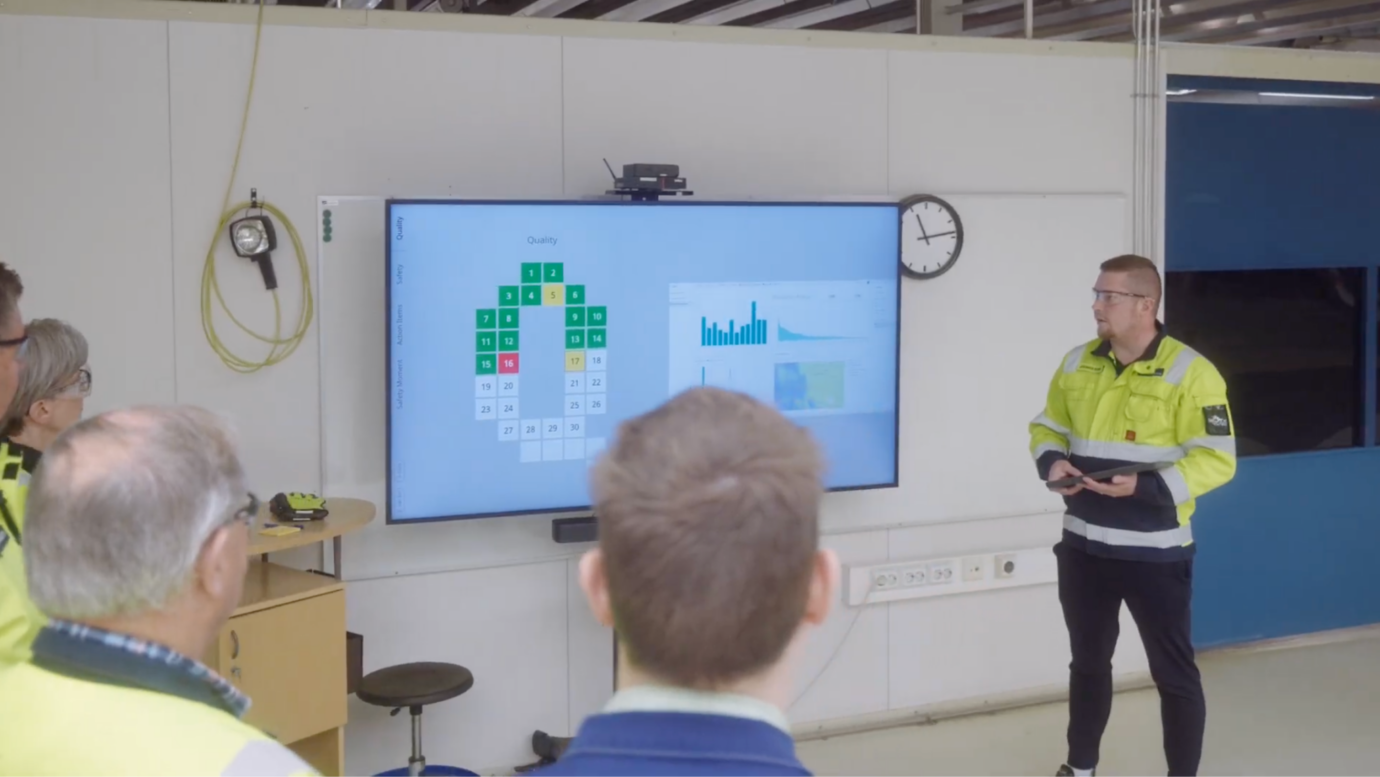
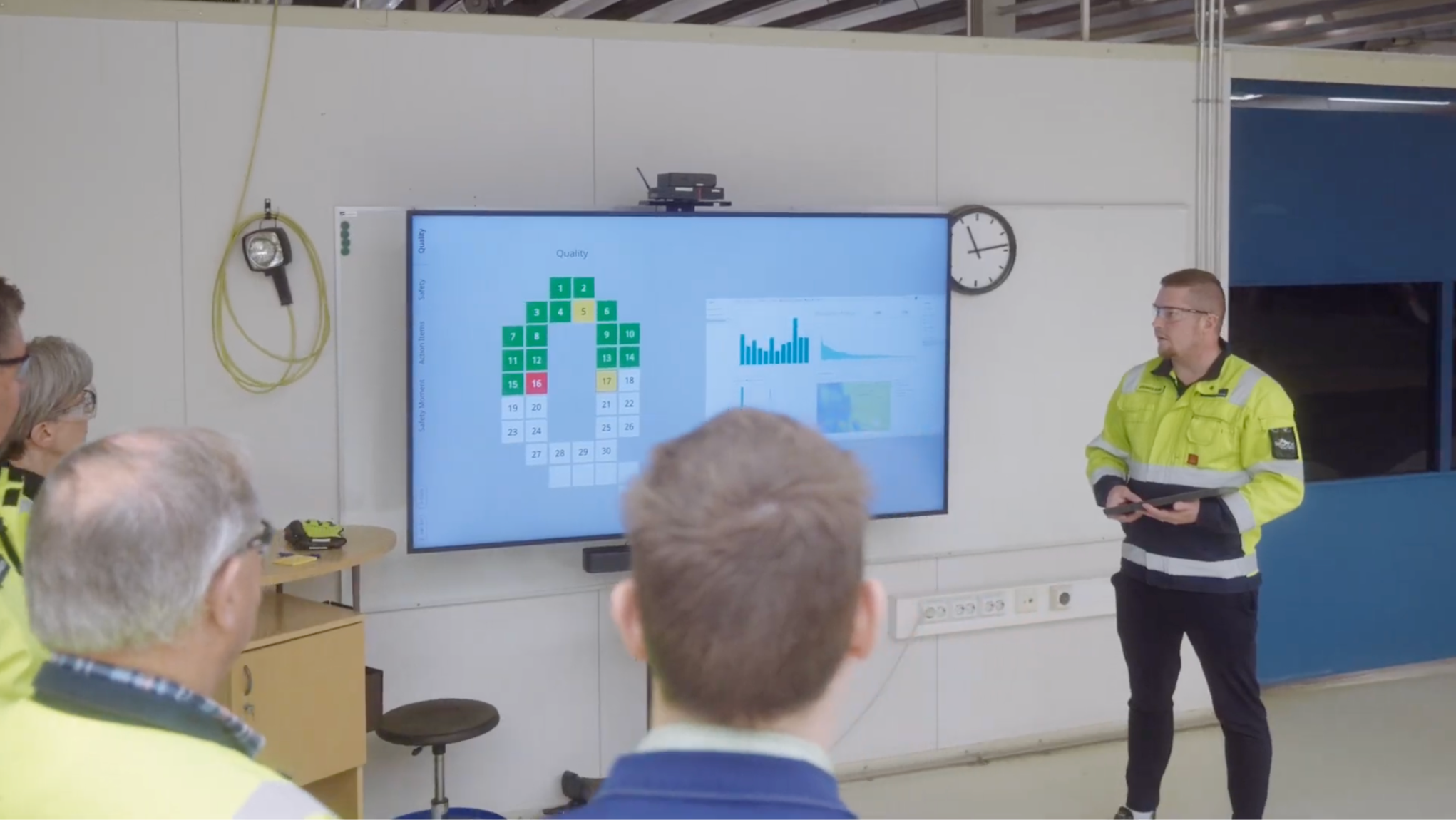
The idea is one tabbed board for the floor meeting that gathers a team’s operational data in a single place, tailored to each shift or team — for a production team that might be things like live KPIs, quality figures or an action tracker.
At Valmet Automotive, it brings together things the team already works from, such as the Power BI production reports, the Safety Cross and the accident-free-days counter, instead of a whiteboard on the wall and Power BI on a laptop someone has to plug in and log into.
“Everything’s on one screen, tailored to each shift or team — no separate whiteboard and separate display,” Kuru explains the benefits.
It’s still early, but the direction is clear: the same screens that keep the floor informed every day, becoming where the team runs its meeting.
For Kuitunen, it all comes back to the people the screens reach.
“Valotalive’s screens have worked well for our daily communication and let us reach our entire organization — quickly, effectively, and in a way that genuinely engages people. At the core of everything are our people: our work community is what makes us an exceptional place to work.”
Kirsi Kuitunen, Communications Manager, Valmet Automotive
See what Valotalive could do for your factory floor
Valotalive helps deskless workplaces reach every employee with real-time, on-brand communication and data sharing on screens across all locations. Start a free trial or book a demo to see how it would work in your environment.